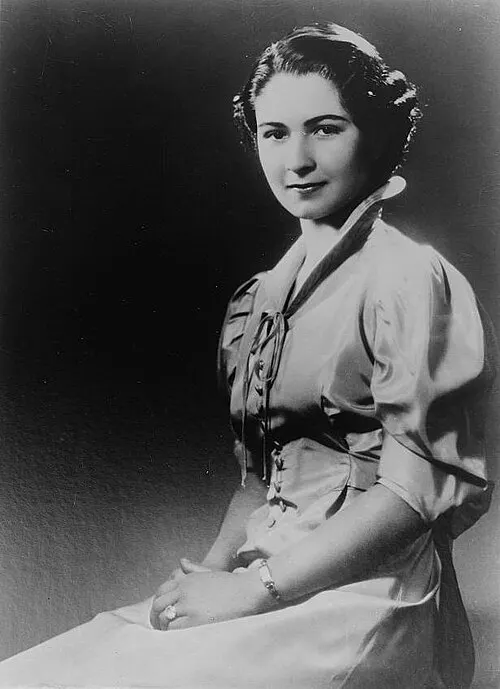
Painter and activist · Egypt
Inji Aflatoun
Inji Aflatoun (1924–1989), also spelled Efflatoun, was an Egyptian painter and a Marxist and feminist activist. Taught by the surrealist Kamel El-Telmissany, she showed with the Art and Freedom group as a teenager, then devoted herself to politics and to painting the lives of Egyptian peasants and workers. Imprisoned from 1959 to 1963 for her communist activity, she painted the women in her prison; these works are considered her finest. Her later landscapes are full of white light.
Updated 3 min read

A rebel from a wealthy family
Inji Aflatoun was born in Cairo in 1924 into an aristocratic family. As a teenager she was taught by the painter Kamel El-Telmissany, one of the founders of the Egyptian surrealist group Art and Freedom (al-Fann wa al-Hurriyya), and she exhibited with the group in the early 1940s. Her early paintings are dark and dreamlike; the Mathaf museum in Doha holds Girl and Monster (1942) and The Girl of Port Said (1957). She also studied with the Swiss painter Margo Veillon, who lived in Cairo.
Through the same circles she discovered Marxism. She became a communist and a feminist, spoke for Egyptian women at international congresses after the Second World War, and wrote pamphlets on women's rights and national independence.
Painting the people
From the late 1940s her painting turned to the real lives of Egyptians, in a style indebted to the social realism of Mexican muralism: peasant women in the fields, workers, fishermen and their families, painted in a direct, socially committed style. She travelled in the countryside to paint, and her work became part of her politics.
Prison
In 1959 President Nasser's government arrested hundreds of communists. Aflatoun was arrested on 19 June 1959 and held at the Abi Zaabal and Qanater women's prisons, north of Cairo. Accounts of her release differ: Al Jazeera says 1962, other sources 1963. Painting was forbidden at first, but she persuaded the authorities to let her work, and for the first years she painted the women around her: political prisoners and ordinary criminals, sleeping in the crowded dormitory, waiting, working, looking out through the bars. Later she painted what she could see beyond the walls — trees and flowers seen through bars.
These prison paintings, quiet and compassionate rather than angry, are now regarded as the high point of her work and among the most important images in modern Egyptian art.
How to look at the prison paintings: start with the bodies, which are packed together and often asleep, and notice how little they are individualised or dramatised. Then look at the bars and the light; the confinement is shown by structure, not by a gesture. The calm of the painting is the position she took towards the women she painted. That reading is this site's own.
Light
After her release her style changed. Her landscapes of the Nile, the desert and the countryside are made of short, separated strokes of colour on a bare white ground, so that the canvas seems filled with light; critics often call this her "white" period, and the tree, a symbol of freedom, recurs. She exhibited in Egypt, Europe and the socialist countries, and died in Cairo in 1989. Her 1993 Arabic memoir, Mudhakirat Inji Efflatoun: Min al-Tufula ila al-Sajn, has been published in English, as From Childhood to Prison, in The Life and Work of Inji Efflatoun, edited by Sultan Sooud Al Qassemi and Suheyla Takesh for the Barjeel Art Foundation and published by Skira in 2025; the memoir is based on an interview with her.
Where to see the work
The Mathaf: Arab Museum of Modern Art in Doha holds her work and publishes an encyclopedia entry on her. Barjeel's book on her life and work and the 2024 Al Jazeera World film Painting from prison are the best ways to see the prison paintings beyond a museum visit. Ask any institution which works are on view.
See also
African women artists; the painters Hussein Bicar and Mahmoud Saïd; the contemporary artist Ghada Amer; and our lists of Egyptian painters and Egyptian artists.