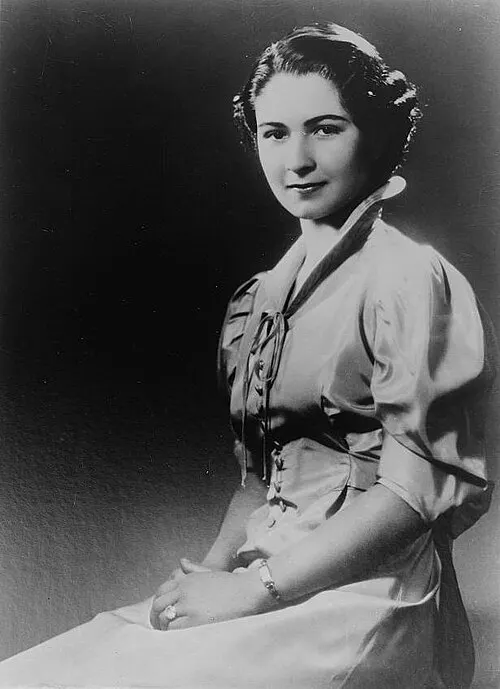
Painter and illustrator · Egypt
Hussein Bicar
Hussein Bicar (1913–2002) was an Egyptian painter, illustrator and poet from Alexandria. A master of portrait and of quiet, luminous scenes of the Egyptian countryside and Nubia, he was also the country's best-known press and book illustrator: he drew for Akhbar el-Yom from its first years and created the look of Sindbad, Egypt's first children's magazine. He received the Mubarak Prize for the Arts in 2000.
Updated 3 min read

Alexandria and Cairo
Hussein Amin Bicar was born on 2 January 1913 in the Anfushi quarter of Alexandria, though two sources give 1912. He entered Cairo's Higher School of Fine Arts in 1928, studied under Youssef Kamel and Ahmed Sabry, and graduated in 1933 (some accounts say 1934). He began a long career as a teacher of art. Accounts of that career differ: one says he taught drawing in Morocco from 1939 and later taught in the painting department of the Faculty of Arts in Qena, another that he taught at Cairo's fine arts academy.
The painter
Bicar's painting is calm, clear and full of light. He was a gifted portraitist, and painted many of the writers, artists and public figures of his time. His other great subject was the people of Upper Egypt and Nubia: women carrying water, farmers, boats on the Nile, villages under a bright sky, painted with soft colours and a classical sense of form. He was known as a poet, a musician and an art critic as well; one source adds that he never learned to read musical notation despite his skill. His oil paintings of peasant women often show them swaying through fields of crops or drawing water from the Nile in terracotta jars, and his genre scenes were much inspired by the countryside of Qena and the landscapes of Nubia.
How to look at a Bicar: look for the way light sits on skin and cloth. The colours are soft and the composition is built for calm, so the pleasure is in the details of hands, headscarves and a tilted jar. The press work shows the other side of the same hand, a quick, elegant line made to be printed. That reading is this site's own.
Bicar combined the academic precision he had learned at the School of Fine Arts with a feeling for ordinary people: his paintings are clearly built and calm in rhythm, closer to serenity than to drama, and show the faces and bodies of rural Egypt with dignity and tenderness. That is why he was loved by a wide public that rarely visited galleries but knew his drawings from newspapers and books.
The illustrator
For millions of Egyptians Bicar was above all the artist of the printed page. He joined the Akhbar el-Yom press house as an illustrator, in 1945 according to one gallery's account, though another source says he left the Fine Arts school in 1959 to work there full-time until 1962; his drawings appeared in its newspapers and magazines, often with his own poetry. Sindbad, the first Egyptian magazine for children, was launched in January 1952, and he was its key cartoonist, illustrating covers and stories. He illustrated the covers and pages of many books, and his elegant line became familiar across the Arab world.
Legacy
In 2000 he received the Mubarak Prize for the Arts, then Egypt's highest cultural award. He died in Cairo on 16 November 2002, aged 89. He belongs to the generation that followed the pioneers Mahmoud Saïd and Mahmoud Mokhtar, alongside painters such as Inji Aflatoun.
Where to see the work
The Jordan National Gallery of Fine Arts in Amman is named among the public collections that hold his work, and Egyptian galleries such as Almasar publish biographies and sell his paintings; the Dafbeirut collection also lists him. His illustrations are best found in back issues of Sindbad and in the books he illustrated. We found no museum devoted to him.
See also
Farouk Hosny, another Alexandrian painter; Effat Nagy; and our lists of Egyptian painters and Egyptian artists.