Music genre · Ghana · Nigeria
Highlife
Highlife is a family of popular music styles that began in Ghana in the early twentieth century, combining local rhythms and melodies with brass-band, jazz, Caribbean and Latin influences. Dance-band leaders such as E.T. Mensah, "the King of Highlife", spread it across West Africa from the 1950s, and it is a direct ancestor of both Afrobeat and Afrobeats.
Updated 2 min read
Where the name comes from
In the coastal towns of the Gold Coast, as Ghana was known under British rule, local musicians mixed Akan and Fante rhythms with the music of brass bands, sailors' guitars, church hymns and, later, jazz and Caribbean calypso. In the 1920s orchestras played this music for elite audiences in exclusive clubs; people outside, who could hear it but not afford to go in, called it the music of the "high life". The name stuck to the sound.
Dance-band highlife
The big-band form took shape in the 1940s and 1950s. Its leading figure was E.T. Mensah (1919–1996), a trumpeter and saxophonist whose band, the Tempos, added Cuban and Latin rhythms and a swing-era horn section. In 1951 the Tempos toured Nigeria, and highlife became the dominant dance music of independence-era West Africa. Mensah is still remembered as the King of Highlife.
In Nigeria, bandleaders such as Victor Olaiya and Rex Lawson built their own versions, and in the east Osita Osadebe developed a long, relaxed highlife style that remained popular for decades.
Guitar bands and palm-wine
Alongside the big bands ran a quieter tradition: guitar-based music associated with palm-wine bars, played with acoustic guitar, voice and light percussion. The Ghanaian guitarist Koo Nimo became its most celebrated modern exponent. Guitar bands such as Nana Ampadu's African Brothers took this sound electric from the 1960s.
Burger-highlife and hiplife
In the 1980s Ghanaian musicians living in Germany — hence "burger", from Hamburg — created burger-highlife, adding synthesisers and drum machines; George Darko was among its stars. In the 1990s, Reggie Rockstone and others mixed highlife with rap to create hiplife, the bridge to today's Ghanaian pop.
Why it matters
Almost every later West African pop style leans on highlife. Fela Kuti began as a highlife musician before creating Afrobeat, and the melodic guitar and horn lines of highlife are audible in Afrobeats. Its blend of local and Caribbean rhythms parallels Congolese rumba, which grew up at the same time in Central Africa.
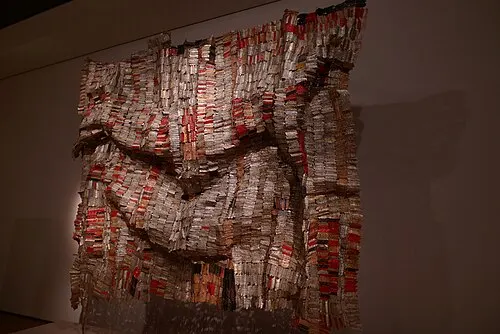
For a Ghanaian visual artist whose work echoes the patterns of West African textiles, see El Anatsui, and kente, Ghana's woven cloth.