Artist · Kenya
Wangechi Mutu
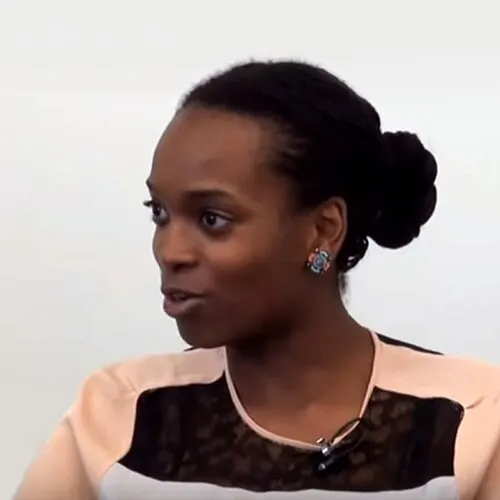
Wangechi Mutu is a Kenyan artist, born in Nairobi in 1972, who works between Nairobi and New York. Known first for collages of hybrid female figures and now also for sculpture, she made the first sculptures ever installed in the facade niches of the Metropolitan Museum of Art, in 2019.
Updated 3 min read
Nairobi and New York
Wangechi Mutu was born in Nairobi in 1972. She left Kenya to finish school at the United World College of the Atlantic in Wales, graduating in 1991, then moved to New York, studied at the New School and Parsons, and then at The Cooper Union, where she completed a BFA in 1996. She went on to Yale on a sculpture fellowship and finished an MFA in 2000. She now works between Nairobi and New York.
The collages
Mutu made her name in the 2000s with collages of female figures assembled from very different sources: fashion and lifestyle magazines, medical and anatomical illustrations, motorbike and wildlife photography, paint and ink. The figures are beautiful and unsettling at once — part human, part animal, part machine.
The method is the argument. Images of women, and of African women in particular, have been cut up and reassembled by magazines, museums and science for a long time. Mutu does the cutting herself, and builds figures that are powerful rather than displayed.
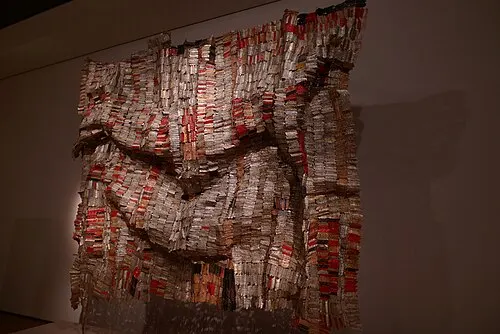
How to look at a Mutu collage: ask where each part came from. Fashion and lifestyle magazines, medical and anatomical illustrations, motorbike and wildlife photographs all supply pieces, so a limb from one source meets a torso from another and the figure never settles into a single body. Which parts are fashion, which are science and which are landscape, and what changes when they are one body? In 2013 a survey, A Fantastic Journey, opened at the Nasher Museum of Art at Duke University and travelled to the Brooklyn Museum.
Into sculpture
Over the past fifteen years sculpture has taken a larger place in her work: figures in bronze, but also in soil, wood, paper pulp and other natural materials, often made in her Nairobi studio. Several deal with water, land and the relationship between people and the environment in East Africa.
The Met facade, 2019
In September 2019 the Metropolitan Museum of Art in New York unveiled The NewOnes, will free Us: four bronze sculptures, titled The Seated I to IV, installed in the niches of its Fifth Avenue facade, which had stood empty since the building was completed. It was the first commission in a new annual series for the facade, conceived by Mutu with Sheena Wagstaff, the museum's chair of modern and contemporary art, and the project curator Kelly Baum. It stayed on view into 2020; the museum's own pages give two different closing dates, in June and in November.
The figures rework the caryatid, the architectural support in the form of a figure that is almost always female. Mutu's women are seated, magisterial or kneeling: guardians of the museum's gate. The Met's website records the commission and the facade commissions that followed.
Intertwined
In 2023 the New Museum in New York gave Mutu its entire building for Intertwined, a survey of more than a hundred works across painting, collage, drawing, sculpture and film, on view from 2 March to 4 June. It was the first time the museum had devoted the whole building to a single artist. Earlier, her exhibition Nguva na Nyoka at the Victoria Miro gallery in London in 2012 included a video, Nguva, in which a sea creature comes ashore.
Related artists
Mutu and Njideka Akunyili Crosby are often discussed together: two artists born in Africa, trained at Yale, who use collage to show how images shape identity. Another Kenyan-born artist with a worldwide reputation is the potter Magdalene Odundo; see our list of Kenyan artists. For more women who have shaped art from the continent, read our guide to African women artists.