Painter, sculptor and novelist · Morocco
Mahi Binebine
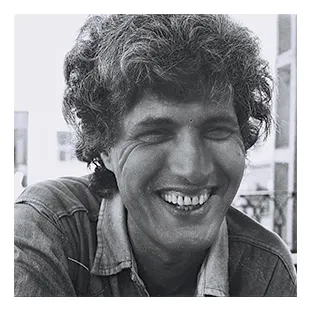
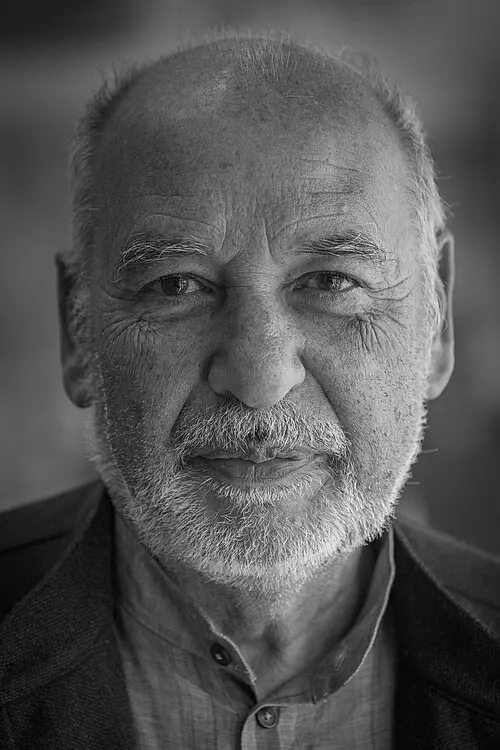
Mahi Binebine (born 1959) is a Moroccan painter, sculptor and novelist from Marrakech. He taught mathematics in Paris before turning to art and writing, lived in New York in the 1990s, and has worked in Marrakech since 2002. His paintings of masked, crowded figures are in collections including the Guggenheim, and his novel Les Étoiles de Sidi Moumen became Nabil Ayouch's film Horses of God (2012).
Updated 3 min read

From mathematics to art
Mahi Binebine was born in Marrakech in 1959. In 1980 he went to Paris to study mathematics, and for about eight years he taught the subject there. He painted and wrote in his spare time until art took over: by the late 1980s he was exhibiting as a painter, and in 1992 he published his first novel.
He lived in Madrid and then in New York from 1994 to 1999, where his work entered the collection of the Guggenheim Museum, before returning to Marrakech in 2002. In 2025 the Smithsonian and the Pérez Art Museum Miami were reported to have acquired works of his, among them a monumental canvas, 2.10 by 1.50 metres, for the Miami museum.
The paintings and sculptures
Binebine's paintings are crowded with figures: bodies pressed together, faces hidden behind masks, people bound, packed into boats or waiting. He works with pigments, wax and resin on canvas and wood, often in earthy colours with sudden accents of red or blue. He also makes sculptures, many of them in bronze, which repeat the same anonymous, mask-like heads.
How to look at a Binebine: count the figures, then look for faces. The crowd is the subject, and the masks and wrapped heads keep individuals from standing out, so the pictures are about numbers, pressure and anonymity as much as about any one person. Notice the surface too: the wax and resin catch the light differently from the pigment, which gives the earthy colours a skin. That reading is this site's own.
Imprisonment and confinement run through the work, and they have a family history. In 1971 his elder brother Aziz, a young army officer, was caught up in a failed coup against King Hassan II. He spent eighteen years in the secret desert prison of Tazmamart, where half the prisoners died; his testimony inspired Tahar Ben Jelloun's novel This Blinding Absence of Light. Their father, Mohamed Binebine, meanwhile was a companion and jester at the king's court for decades. Mahi has said that to keep his post his father had to deny his son in public, and that he himself refused to see him for many years; he told the story in his novel Le Fou du roi (2017). Aziz was released in 1992.
The novels
Binebine has published more than a dozen novels in French. Cannibales (1999; English: Welcome to Paradise) follows migrants waiting to cross the Strait of Gibraltar; its English translation by Lulu Norman was shortlisted for the Independent Foreign Fiction Prize in 2004. Les Étoiles de Sidi Moumen (2010) imagines the lives of the young men from a Casablanca slum who carried out the suicide bombings of 16 May 2003. Translated as Horses of God, it was adapted by the director Nabil Ayouch into a film of the same name, Morocco's entry for the Oscars.
With Ayouch he then opened a cultural centre in Sidi Moumen itself, Les Étoiles, where young people from the district learn music, dance, film and art. With Ayouch and the Ali Zaoua Foundation he has been associated with six such centres called Les Étoiles, for street children and young people from poor districts.
Where to see the work
The Guggenheim Museum in New York, the Smithsonian and the Pérez Art Museum Miami are named as holding his work; ask each which pieces are on view. In Morocco, a 2016 exhibition, Face à l'Histoire, was held at the MACMA museum in Marrakech, and galleries that represent him announce current shows. His novels, in French and in English translation, are the other way in.
See also
Hassan El Glaoui and Chaïbia Talal; the Casablanca School; our guide to North African art; and our lists of Moroccan artists, Moroccan painters and Moroccan sculptors.