Art movement · Nigeria
The Zaria Art Society
The Zaria Art Society was a group of Nigerian art students founded on 9 October 1958 at the college in Zaria that later became Ahmadu Bello University. Known as the "Zaria Rebels", they rejected the European-focused teaching of their British lecturers and developed "natural synthesis" — modern art built from Nigerian visual traditions and useful foreign ideas.
Updated 2 min read
Students against the syllabus
In the late 1950s Nigeria's leading art course was at the Nigerian College of Arts, Science and Technology in Zaria, in the north of the country. Its teachers were mostly British, and the curriculum was built on European academic art: still lifes, life drawing, landscape in the manner of the English schools.
Independence was coming in 1960, and a group of students decided that this was the wrong preparation for artists of a new nation. On 9 October 1958 they founded the Zaria Art Society. Their teachers and later historians called them the "Zaria Rebels".
Who they were
The society's members included Uche Okeke, Demas Nwoko, Yusuf Grillo, Bruce Onobrakpeya, Simon Okeke, Jimoh Akolo, Oseloka Osadebe, Emmanuel Odita, Ogbonaya Nwagbara and Solomon Wangboje. Many went on to become the most influential painters, sculptors, printmakers and teachers of independent Nigeria.
Natural synthesis
The group's guiding idea was articulated by Uche Okeke as natural synthesis: identify what was good in Nigeria's own visual cultures — Nok terracottas, Benin and Ife bronzes, Igbo uli body and wall painting, Yoruba carving — and combine it with what was genuinely useful in the foreign art they were being taught. Not a return to the past, and not imitation of Europe, but a deliberate mixture.
In practice each artist found a different synthesis. Okeke drew on uli line drawing. Onobrakpeya developed new printmaking techniques. Nwoko worked between sculpture, design and architecture. Grillo's paintings combined Yoruba forms with a cool, modern palette.
After Zaria
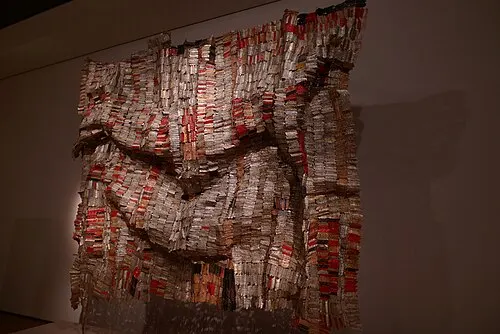
The society formally lasted only until about 1962, when its members graduated, but its influence did not end there. Uche Okeke went on to teach at the University of Nigeria in Nsukka, where an "uli revival" shaped the so-called Nsukka school — the department that El Anatsui joined in 1975.
Related movements and artists
The Zaria students were reacting partly against the path of older modernists such as Ben Enwonwu. In the same years, artists in Osogbo took a very different, workshop-based route to a modern Yoruba art (see the Oshogbo school), and in Khartoum a similar search for a national modern art produced the Khartoum School. For the ancient sculpture that inspired Zaria, see African sculpture.