Sculptor · Nigeria
Nnenna Okore
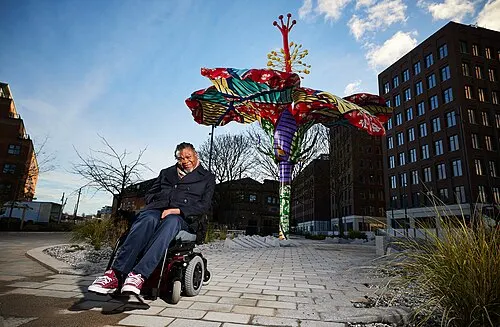
Nnenna Okore (born 1975) is a Nigerian sculptor, born in Australia and based in Chicago. Trained at the University of Nigeria, Nsukka, where she studied with El Anatsui, she transforms humble, often discarded materials — burlap, paper, clay, rope, wax — into large, undulating forms that evoke skin, earth and natural growth, and speak of decay, renewal and the environment.
Updated 2 min read

Nnenna Okore was born in 1975 in Australia, to Nigerian parents, and at the age of four moved to Nigeria, where they worked at the University of Nigeria in Nsukka, in the south-east. She took a first degree in painting there, with first-class honours, in 1999. One of her teachers was El Anatsui, whose transformation of found materials shaped her own approach. She later took an MA (2004) and an MFA (2005) in sculpture at the University of Iowa in the United States, received a Fulbright Scholar Award in 2012, and went on to become a professor of art at North Park University in Chicago, where she runs the sculpture programme. In 2023 she received a PhD in fine art from Monash University.
Her sculptures are made by hand, slowly and repetitively: burlap is unravelled, dyed, twisted and knotted; paper is torn and rolled; clay and wax are pressed into sheets. The resulting reliefs and hanging forms ripple across walls and spaces like skin, bark or eroding land. They draw on the textures of Nigerian markets and landscapes, and on processes of decay and regeneration in nature.
How to look at an Okore: let your eye follow the repetition. Each strand, knot or rolled strip is small, and the effect comes from hundreds of them; the colours come from the materials and from earthy dyes, so the works read as bark, skin or ploughed earth. Then ask what you would see if the material were undone. That reading is this site's own.
Her recent solo exhibitions include the Stanley Museum of Art (2023), the Mattatuck Museum (2017), the Brooks Museum in Memphis (2016), the Krannert Art Museum (2015) and the Elmhurst Art Museum (2015).
Where to see the work
The venues above are the places to ask about her work and its display; her galleries announce new shows. See also Otobong Nkanga and our list of Nigerian sculptors.