Photojournalist · South Africa
João Silva
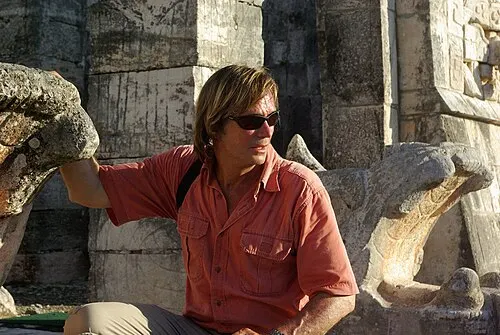
João Silva (born 1966) is a Portuguese-born South African photojournalist. One of the four members of the Bang-Bang Club, he covered South Africa's township violence in the early 1990s, went with Kevin Carter to Sudan in 1993, co-wrote the book The Bang-Bang Club, and became a war photographer for The New York Times. In 2010 he lost both legs when he stepped on a landmine in Afghanistan, and went back to photography.
Updated 3 min read

From Lisbon to Johannesburg
João Silva was born in Lisbon in 1966 and moved to South Africa with his family as a child. He began photographing the conflict in the townships around Johannesburg at the start of the 1990s, working with Kevin Carter, Ken Oosterbroek and Greg Marinovich. Together they were known as the Bang-Bang Club.
Sudan and Thokoza
In March 1993 Silva travelled with Carter to southern Sudan, where Carter took the photograph of a child and a vulture that won a Pulitzer Prize. On 18 April 1994 Silva was with the group in Thokoza when Oosterbroek was killed and Marinovich wounded. With Marinovich he later wrote The Bang-Bang Club: Snapshots from a Hidden War (2000), which became a film, The Bang Bang Club, in 2010, with Ryan Phillippe as Marinovich and Taylor Kitsch as Carter. Our guide to the Bang-Bang Club tells the story.
War photographer
After 1994 Silva covered conflicts far beyond South Africa: Iraq, Afghanistan, the Balkans and the Middle East. For many years he worked as a contract photographer for The New York Times, and his pictures have won World Press Photo awards. In Iraq he photographed the country's Shia community in the aftermath of the American invasion, and in 2005 published the pictures as a book, In the Company of God. He was known among colleagues for his calm under fire and for staying on stories long after the first wave of coverage had moved on; after his injury, a tribute in South Africa's Daily Maverick called him "the best war photographer in the world".
Kandahar, 2010
On 23 October 2010 Silva was on assignment for the Times with American soldiers in Kandahar province, Afghanistan. Near Deh-e Kuchay, as he followed two soldiers and a dog trained to find explosives past a former Taliban checkpoint, he stepped on a landmine. He lost both legs below the knee and was badly injured. The Times correspondent Carlotta Gall reported that he kept taking pictures as medics applied tourniquets and carried him to the helicopter. In Johannesburg, an exhibition and auction of his prints raised money for his recovery.
Back to work
Silva spent months at Walter Reed Army Medical Center in Washington learning to walk on prosthetic legs. In July 2011, less than a year after the explosion, when the hospital held a ceremony before closing, he photographed it, walking with a cane that he had to shift from hand to hand before each frame; the picture ran on the front page of the Times. That September he joined the paper's staff. A speech he later gave at the Bronx Documentary Center in New York was published in full by the Times.
Four photographers, four paths
Read together, the Bang-Bang Club's profiles on this site show how differently the same years marked each man. Oosterbroek was killed in Thokoza six days after Carter's Pulitzer was announced, and Carter, who had long struggled with depression, died by suicide that July. Marinovich, wounded the same day, became a writer and filmmaker and went on to investigate the Marikana massacre. Silva is the one who kept going back to war, and who returned to it even after Kandahar, on prosthetic legs.
Where to see his work
His South African pictures from 1990 to 1994 are in The Bang-Bang Club, and his work from Iraq in In the Company of God. Most of his war photography, from Iraq to Afghanistan, was made for The New York Times and can be found in its archive.
See also
African photography and our list of South African photographers.