National museum · Ethiopia
National Museum of Ethiopia, Addis Ababa
The National Museum of Ethiopia, near Arat Kilo in Addis Ababa, is best known for Lucy, the 3.2-million-year-old skeleton of Australopithecus afarensis, shown in its basement as a cast. Upstairs it is also one of the few places to see Ethiopian painting in depth, from early parchment to the modern masters of the twentieth century.
Published 2 min read
From archaeology institute to national museum
The museum grew out of the Institute of Archaeology, founded in 1958 to support the French archaeological missions working in northern Ethiopia. The idea of a national museum came after 1976, when the government set up a cultural heritage administration; its successor, the Ethiopian Heritage Authority, runs the museum today. The building sits between Arat Kilo and the graduate school of Addis Ababa University; a 2025 article in Capital Ethiopia called it a brutalist landmark, and plans for a new national museum building have been discussed.
Lucy and Selam
The basement is given to human evolution. Its stars are Lucy, the partial skeleton of Australopithecus afarensis found in the Afar region in 1974 and dated to about 3.2 million years ago, and Selam, the skeleton of a young child of the same species, about 3.3 million years old. What visitors see are casts: the original fossils are kept in storage and have rarely left the country. Lucy toured museums in the United States from 2007 to 2013, and in 2025 the National Museum in Prague showed Lucy and Selam for two months — Lucy's first showing in Europe and Selam's first abroad.
Archaeology and history
Around the edges of the ground floor, Ethiopia's history runs from the pre-Aksumite period and the kingdom of Aksum to the Solomonic and Gondarine eras. Lonely Planet picks out a bronze oil lamp from before the first century AD, decorated with a dog chasing an ibex, and a rock-hewn chair of the fourth century BC carved with ibexes. The middle of the room holds royal objects, among them Emperor Haile Selassie's huge carved wooden throne. In 2022 the president inaugurated a new archaeological exhibition prepared with the French embassy, a partnership that goes back to the museum's origins.
Ethiopian painting
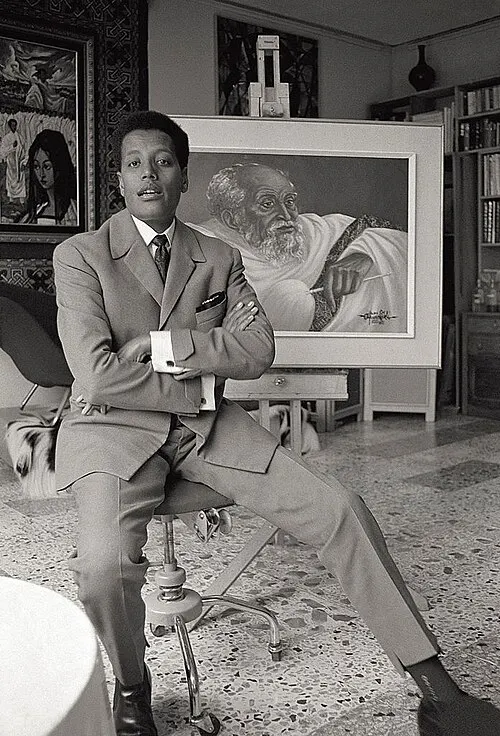
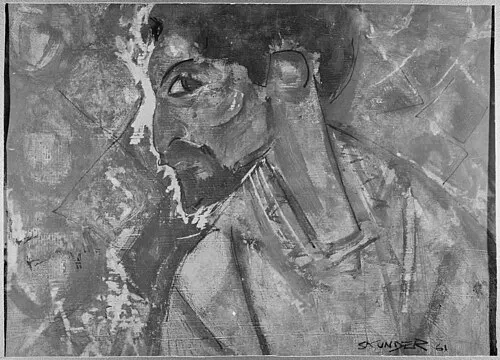
For a site about art, the first floor is the reason to come. Its gallery runs through Ethiopian art from early parchment — possibly of the fourteenth century — to oil paintings on canvas by the leading modern artists of the twentieth century. Guides single out Afewerk Tekle, Ethiopia's best-known modern painter, whose large canvas African Heritage hangs here, and a painting of the meeting of Solomon and the Queen of Sheba, the story from which the Ethiopian kings claimed descent. The second floor shows crafts: weapons, jewellery, utensils, clothing and musical instruments. For the modernists who made their careers abroad, such as Skunder Boghossian, see their profiles.
Visiting
The museum is near Arat Kilo, not far from the university's main campus at Sidist Kilo, where the separate Ethnological Museum occupies Haile Selassie's former palace. Check opening hours locally. For the wider region, see East Africa.