Painter · Sudan
Ibrahim El-Salahi
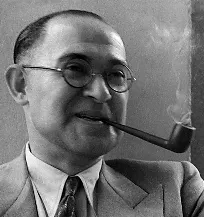
Ibrahim El-Salahi is a Sudanese painter, born in Omdurman in 1930, and a founder of the Khartoum School of modern art. He combined Arabic calligraphy with African and Islamic forms, survived six months in prison without trial in 1975, and in 2013 became the first African artist to receive a retrospective at Tate Modern.
Updated 3 min read
Omdurman and London
Ibrahim El-Salahi was born in 1930 in Omdurman, across the Nile from Khartoum. He grew up with Qur'anic schooling, and the practice of writing Arabic script was part of his childhood. He studied art in Khartoum and then, from 1954 to 1957, at the Slade School of Fine Art in London.
Finding a language
Back in Sudan, El-Salahi found that his European training did not connect with his audience. He began to work with what was around him: the shapes of Arabic letters, the patterns of Sudanese crafts, African masks and Islamic decoration. Letters dissolve into figures and figures into ornament, often in black, white and earth tones.
With Ahmed Shibrain and Kamala Ibrahim Ishaq he became a central figure of the Khartoum School, the movement that tried to give newly independent Sudan a modern art of its own, drawing on both its Arab and its African heritage.
Prison Notebook
El-Salahi held public positions in Sudan's cultural administration and diplomacy. In 1975 he was accused of involvement in an attempted coup and imprisoned without trial for six months and eight days in Kober Prison in Khartoum. Prisoners were forbidden to write or draw. He hid a pencil and drew on the brown paper bags in which food was distributed, sketching ideas during the short daily exercise period.
After his release he produced the Prison Notebook (1976), a sequence of ink drawings that record the experience. A drawing from it is in the collection of the Museum of Modern Art in New York.
How to look at the Prison Notebook: remember the paper bags on which the first sketches were made, in secret, in the minutes of the daily exercise period. Then look at how script and figure merge: the habit of writing that he grew up with is the way the drawings hold an experience that could not be written down. That second point is this site's own reading.
Exile and recognition
El-Salahi left Sudan after his release, worked in the Gulf, and later settled in Oxford, England, where he has lived for decades. His later work includes extended series of drawings and paintings built on tree forms.
In 2013 Tate Modern presented Ibrahim El-Salahi: A Visionary Modernist, the first retrospective the museum had given to an artist from Africa; it ran until 22 September 2013. It helped change how museums in Europe and North America tell the history of modern art. He had won the Prince Claus Award in 2001, and in 2015 University College London gave him an honorary Doctor of Literature. In 2022 he took part in the main exhibition of the 59th Venice Biennale, The Milk of Dreams.
Recent work and where to see it
Later exhibitions include Pain Relief Drawings at the Kunsthalle Zürich in 2023 and Haraz, from 7 June to 27 October 2024. Collection lists name the Museum of Modern Art, the Metropolitan Museum of Art and the Guggenheim Abu Dhabi among the museums that hold his work, though we have not checked each museum's own page. Vigo Gallery in London, which shows him, announced an exhibition of his early years, 1950–1968, for 2026. Tate's archive of the 2013 retrospective and the Prince Claus Fund's page on his award are the best places to start.
Related artists and movements
El-Salahi's fusion of script and image has parallels across North Africa and the Arab world, notably in the Casablanca School of Farid Belkahia. For his Sudanese contemporaries and successors, from Hussein Shariffe to Ahmed Umar, see our list of Sudanese artists. In Egypt, an earlier generation led by Mahmoud Saïd had already argued for a modern art rooted in local life. For the ancient and Christian art of neighbouring Ethiopia, see Ethiopian art.